
How AI is Transforming Modern Education
Explore the revolutionary impact of artificial intelligence on education. Discover how AI personalizes learning, enhances teaching, and prepares students for the future job market.

How AI is Transforming Modern Education
We are witnessing the most significant transformation in education since the printing press.
Artificial Intelligence is not just changing how we learn - it's revolutionizing what's possible in education. From personalized tutoring available 24/7 to intelligent systems that adapt to each student's learning style, AI is making high-quality education more accessible, effective, and engaging than ever before.
But this transformation goes beyond just new tools - it's fundamentally reshaping the relationship between teachers, students, and knowledge itself.
This comprehensive analysis explores how AI is transforming every aspect of modern education, the opportunities it creates, the challenges it presents, and what the future holds for learners and educators.
What you'll discover:
- The current state of AI in education and its rapid evolution
- How AI personalizes learning for individual students at scale
- The transformation of teaching roles and pedagogical approaches
- Real-world applications and success stories across educational institutions
- Future trends and implications for students, teachers, and society
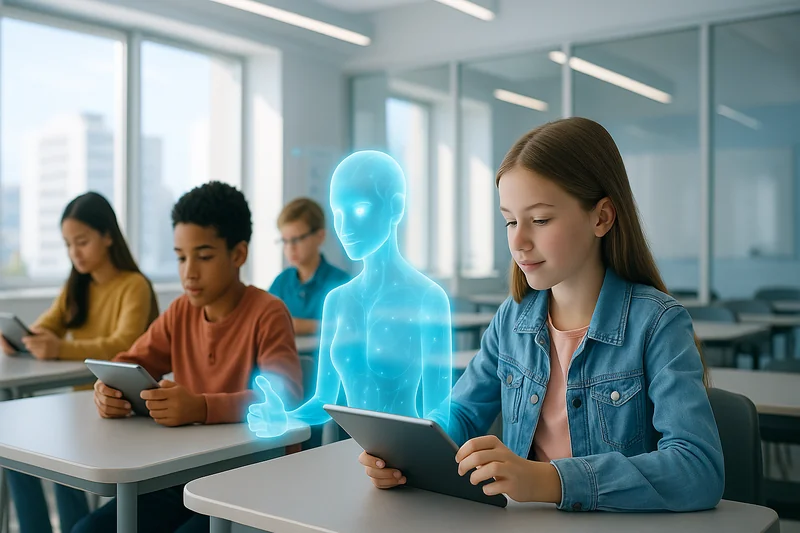
The Current State of AI in Education
The Scale of Transformation
AI adoption in education is accelerating rapidly:
Market Growth:
- Global AI education market: Expected to reach $20 billion by 2027
- Institutional adoption: 47% of educational institutions now use some form of AI
- Student engagement: 73% of students report positive experiences with AI learning tools
- Teacher acceptance: 68% of educators see AI as beneficial to their teaching
Technology Maturation:
- Natural language processing: AI can now engage in sophisticated educational conversations
- Machine learning algorithms: Systems that truly adapt to individual learning patterns
- Computer vision: AI that can analyze student behavior and engagement
- Predictive analytics: Systems that anticipate learning difficulties before they occur
Key AI Technologies in Education
Intelligent Tutoring Systems (ITS):
- Adaptive learning paths: Content that adjusts to student performance in real-time
- Personalized feedback: Immediate, specific guidance tailored to individual needs
- Socratic questioning: AI that guides students to answers through strategic questions
- Emotional intelligence: Systems that recognize and respond to student frustration or confusion
Natural Language Processing:
- Automated essay scoring: AI that evaluates written work with increasing sophistication
- Language learning: Conversational AI for practicing foreign languages
- Reading comprehension: AI that helps students understand complex texts
- Research assistance: AI that helps students find and synthesize information
Computer Vision and Multimodal AI:
- Engagement monitoring: AI that tracks student attention and participation
- Accessibility support: Visual recognition for students with disabilities
- Laboratory analysis: AI that analyzes scientific experiments and procedures
- Art and design feedback: AI that evaluates creative work and provides guidance
Personalized Learning at Scale
The Personalization Revolution
Traditional one-size-fits-all education is giving way to truly individualized learning experiences.
Individual Learning Profiles:
AI systems now create detailed profiles for each student, tracking:
- Learning pace: How quickly students grasp different concepts
- Preferred modalities: Whether students learn better through visual, auditory, or kinesthetic approaches
- Knowledge gaps: Specific areas where students need additional support
- Motivation patterns: What types of content and challenges engage each student
- Optimal timing: When students are most receptive to different types of learning
Adaptive Content Delivery:
- Dynamic difficulty adjustment: Problems that become harder or easier based on performance
- Content personalization: Materials tailored to student interests and cultural background
- Learning path optimization: Routes through curriculum optimized for individual success
- Prerequisite filling: Automatic identification and remediation of knowledge gaps
Case Study: Adaptive Mathematics Learning
Platform: AI-powered mathematics education system Implementation: 50,000 students across 200 schools Duration: Two academic years
Methodology:
- Diagnostic assessment: AI evaluates each student's mathematical understanding
- Personalized curriculum: System creates individual learning paths
- Real-time adaptation: Content adjusts based on student responses
- Continuous assessment: Ongoing evaluation without traditional testing
Results:
- Learning gains: 34% improvement in mathematical proficiency scores
- Engagement increase: 67% more time spent on voluntary mathematics practice
- Achievement gaps: 28% reduction in performance differences between student groups
- Teacher satisfaction: 85% of teachers reported improved student outcomes
Key Success Factors:
- Granular data collection: System tracked every interaction and response
- Sophisticated algorithms: Machine learning models that truly understood mathematical learning
- Teacher integration: AI supported rather than replaced human instruction
- Student agency: Learners maintained control over their learning experience
Transforming the Teaching Profession
From Sage on the Stage to Guide on the Side
AI is not replacing teachers - it's empowering them to be more effective and focus on uniquely human aspects of education.
Enhanced Teacher Capabilities:
Administrative Efficiency:
- Automated grading: AI handles routine assessment tasks
- Lesson planning: AI suggests resources and activities based on curriculum goals
- Progress tracking: Detailed analytics on student learning without manual data entry
- Parent communication: AI-generated updates on student progress and needs
Pedagogical Support:
- Differentiation assistance: AI identifies which students need what type of support
- Intervention timing: Systems alert teachers when students are at risk of falling behind
- Resource recommendations: AI suggests materials and approaches for specific learning objectives
- Professional development: Personalized learning for teachers based on their needs
Focus on Human Skills:
With AI handling routine tasks, teachers can concentrate on:
- Emotional support: Building relationships and supporting student well-being
- Critical thinking: Facilitating deep discussion and analysis
- Creativity: Encouraging innovation and artistic expression
- Social skills: Teaching collaboration, communication, and empathy
- Ethics and values: Guiding moral and ethical development
New Teaching Models Emerging
AI-Human Collaborative Teaching:
- AI tutors: Provide individualized practice and immediate feedback
- Human teachers: Focus on conceptual understanding and application
- Seamless integration: AI and human instruction complement each other naturally
- Data-driven decisions: Teachers use AI insights to inform their instruction
Flipped Classroom Evolution:
- AI-curated content: Personalized materials for home study
- Intelligent practice: Adaptive exercises that prepare students for class discussion
- Real-time analytics: Teachers know exactly what students understood before class
- Optimized class time: Focus on application, discussion, and collaborative work
Real-World Applications Across Educational Levels
K-12 Education
Elementary School:
Reading Development:
- Phonics support: AI that listens to students read and provides pronunciation feedback
- Comprehension assistance: AI that asks questions to check understanding
- Vocabulary building: Personalized word games and exercises
- Writing support: AI that helps with spelling, grammar, and story structure
Mathematics Foundation:
- Conceptual understanding: Visual representations that adapt to student confusion
- Practice personalization: Problems that target specific skill gaps
- Math anxiety reduction: Encouraging feedback and supportive learning environment
- Real-world connections: AI that shows how math applies to student interests
Middle School:
Cross-Curricular Integration:
- Project-based learning: AI that helps students connect learning across subjects
- Research skills: AI that guides students through information evaluation
- Presentation support: AI that helps students organize and present their ideas
- Peer collaboration: AI that facilitates group work and communication
High School:
College and Career Preparation:
- Advanced coursework: AI tutors for AP and dual enrollment courses
- Standardized test prep: Personalized SAT/ACT preparation programs
- Career exploration: AI that connects academic interests to career paths
- College counseling: AI-assisted guidance for college selection and applications
Higher Education
Undergraduate Programs:
Large Lecture Enhancement:
- Intelligent Q&A: AI that can answer student questions during large lectures
- Engagement monitoring: Systems that track attention and participation
- Concept checking: Real-time polls and quizzes adapted to student understanding
- Resource provision: AI that provides additional materials for confused students
Laboratory and Practical Skills:
- Virtual laboratories: AI-powered simulations for expensive or dangerous experiments
- Skill assessment: AI that evaluates practical competencies
- Safety monitoring: AI that ensures proper procedures and identifies risks
- Equipment optimization: AI that schedules and manages laboratory resources
Graduate Education:
Research Acceleration:
- Literature review: AI that helps identify relevant research and gaps
- Data analysis: AI that assists with complex statistical and computational analysis
- Writing support: AI that helps with academic writing and paper structure
- Collaboration facilitation: AI that connects researchers with similar interests
Professional and Continuing Education
Corporate Training:
- Skill gap analysis: AI that identifies training needs across organizations
- Personalized curricula: Learning paths tailored to job roles and career goals
- Performance prediction: AI that forecasts training effectiveness
- Just-in-time learning: AI that provides information exactly when needed
Professional Development:
- Competency tracking: AI that monitors professional skill development
- Certification preparation: Personalized study plans for professional certifications
- Peer learning: AI that facilitates knowledge sharing among professionals
- Career guidance: AI that suggests development opportunities based on market trends
Global Impact and Accessibility
Democratizing Quality Education
AI is making high-quality educational experiences available to students worldwide, regardless of geographic location or economic circumstances.
Rural and Remote Education:
- Expert access: AI tutors provide specialized knowledge in areas lacking qualified teachers
- Language support: Real-time translation and multilingual educational content
- Infrastructure optimization: AI that works effectively with limited internet connectivity
- Resource sharing: AI that distributes educational resources efficiently across networks
Developing Countries:
Case Study: AI Education Initiative in Sub-Saharan Africa
- Implementation: Solar-powered tablets with AI tutoring software
- Scale: 100,000 students across 15 countries
- Results: 45% improvement in literacy rates, 52% increase in numeracy skills
- Key factor: AI that adapted to local languages and cultural contexts
Special Needs Education:
- Individualized support: AI that adapts to various learning disabilities
- Communication assistance: AI that helps non-verbal students express themselves
- Behavioral analysis: Systems that identify triggers and patterns in student behavior
- Inclusive design: AI that ensures all students can access educational content
Language Learning Revolution
Conversational AI:
- Native-like interaction: AI that provides natural language practice
- Cultural context: AI that teaches language within cultural frameworks
- Pronunciation feedback: AI that analyzes and corrects speech patterns
- Immersive experiences: Virtual reality language learning with AI guides
Multilingual Education:
- Code-switching support: AI that helps students learn in multiple languages
- Translation assistance: Real-time translation that preserves learning
- Cultural bridging: AI that explains cultural concepts across languages
- Heritage language preservation: AI that helps maintain native languages
Challenges and Ethical Considerations
Privacy and Data Security
Student Data Protection:
- Comprehensive profiles: AI systems collect vast amounts of personal learning data
- Long-term tracking: Data that follows students throughout their educational journey
- Behavioral monitoring: Information about attention, emotion, and engagement patterns
- Predictive modeling: AI that makes inferences about future behavior and capabilities
Ethical Framework Requirements:
- Transparent consent: Clear explanation of what data is collected and how it's used
- Data minimization: Collecting only information necessary for educational purposes
- Student agency: Giving learners control over their own data
- Security measures: Robust protection against data breaches and misuse
Equity and the Digital Divide
Access Disparities:
- Technology requirements: AI education often requires advanced devices and high-speed internet
- Cost barriers: Premium AI educational tools may be expensive
- Technical literacy: Students and teachers need training to use AI effectively
- Infrastructure gaps: Rural and low-income areas may lack necessary technology infrastructure
Bias and Fairness:
- Algorithmic bias: AI systems may perpetuate or amplify existing educational inequalities
- Cultural representation: AI training data may not represent diverse student populations
- Language bias: AI systems may work better for native English speakers
- Socioeconomic factors: AI recommendations may inadvertently disadvantage certain groups
Academic Integrity and Authenticity
New Challenges:
- AI-generated work: Students using AI to complete assignments inappropriately
- Assessment validity: Traditional testing may not measure AI-enhanced capabilities
- Learning vs. performing: Distinguishing between student understanding and AI assistance
- Authenticity questions: Determining what constitutes genuine student work
Evolving Solutions:
- Process-focused assessment: Evaluating how students learn rather than just final products
- AI-assisted evaluation: Using AI to detect AI-generated content
- New pedagogical approaches: Teaching students to work ethically with AI
- Policy development: Creating guidelines for appropriate AI use in education
Future Trends and Predictions
Emerging Technologies
Advanced AI Capabilities:
- Emotional AI: Systems that recognize and respond to student emotions appropriately
- Multimodal learning: AI that processes text, voice, image, and video simultaneously
- Quantum computing: Potentially revolutionary increases in AI processing power
- Brain-computer interfaces: Direct neural connections for enhanced learning (experimental)
Virtual and Augmented Reality Integration:
- Immersive learning environments: AI-powered virtual classrooms and laboratories
- Historical recreation: AI that creates accurate historical simulations for learning
- Scientific visualization: AI that makes abstract concepts tangible through AR/VR
- Social presence: AI that creates realistic virtual teachers and classmates
Institutional Transformation
New Educational Models:
- Competency-based progression: AI that tracks skill mastery rather than time spent
- Micro-credentials: AI-verified certificates for specific skills and knowledge
- Lifelong learning platforms: AI that supports continuous education throughout careers
- Global classrooms: AI that enables seamless international educational collaboration
Infrastructure Evolution:
- Smart campuses: AI-optimized physical learning spaces
- Predictive maintenance: AI that manages educational technology infrastructure
- Energy optimization: AI that reduces environmental impact of educational institutions
- Space utilization: AI that optimizes how educational spaces are used
Workforce Preparation
Skills for the AI Age:
- AI literacy: Understanding how to work effectively with artificial intelligence
- Critical thinking: Evaluating AI-generated information and making judgments
- Creativity: Developing uniquely human capabilities that complement AI
- Emotional intelligence: Skills that remain fundamentally human
- Adaptability: Ability to learn and relearn as technology evolves
New Career Paths:
- AI education specialists: Professionals who design and implement AI learning systems
- Learning experience designers: Experts who create engaging AI-enhanced curricula
- Educational data scientists: Analysts who interpret learning analytics
- AI ethics educators: Teachers who help students navigate AI ethical issues
Preparing for the AI-Enhanced Future
For Students
Embrace AI as a Learning Tool:
- Learn to collaborate: Develop skills in working effectively with AI systems
- Maintain critical thinking: Always evaluate AI-generated information
- Focus on understanding: Use AI to enhance learning, not replace thinking
- Develop meta-learning: Learn how to learn effectively with AI assistance
Build Complementary Skills:
- Creative problem-solving: Abilities that AI cannot easily replicate
- Interpersonal communication: Skills for working with humans and AI
- Ethical reasoning: Decision-making in complex moral situations
- Adaptability: Flexibility to work with evolving AI capabilities
For Educators
Professional Development Priorities:
- AI literacy: Understanding AI capabilities and limitations
- Pedagogical integration: Learning to incorporate AI into teaching effectively
- Data interpretation: Making sense of AI-generated learning analytics
- Ethical guidance: Helping students navigate AI use responsibly
Evolving Teaching Practices:
- Personalization at scale: Using AI to individualize instruction for all students
- Process-focused assessment: Evaluating learning processes rather than just outcomes
- Collaborative instruction: Working alongside AI systems to enhance teaching
- Continuous adaptation: Adjusting practices as AI capabilities evolve
For Institutions
Strategic Planning:
- Infrastructure investment: Building technology capacity for AI integration
- Policy development: Creating guidelines for ethical AI use
- Professional development: Training faculty and staff in AI applications
- Partnership building: Collaborating with AI technology providers
Cultural Change Management:
- Stakeholder engagement: Involving all community members in AI adoption
- Change communication: Clearly explaining AI benefits and addressing concerns
- Pilot programs: Testing AI applications before full-scale implementation
- Continuous evaluation: Monitoring AI impact and adjusting approaches
Measuring the Impact of AI in Education
Learning Outcome Metrics
Academic Performance:
- Standardized test scores: Improvements in traditional academic measures
- Skill acquisition speed: Time required to master new concepts
- Knowledge retention: Long-term memory of learned material
- Transfer ability: Application of learning to new contexts
Engagement and Motivation:
- Time on task: Amount of time students spend actively learning
- Voluntary learning: Student-initiated educational activities
- Curiosity measures: Questions asked and exploration behaviors
- Persistence: Continued effort when facing challenges
Systemic Changes
Educational Efficiency:
- Resource utilization: More effective use of educational materials and teacher time
- Cost per student: Reduction in per-pupil educational costs
- Scalability: Ability to serve more students with quality education
- Accessibility: Increased access to high-quality educational experiences
Teacher Impact:
- Job satisfaction: Teacher fulfillment and professional growth
- Professional effectiveness: Improved student outcomes per teacher
- Work-life balance: Reduced administrative burden and stress
- Career development: New opportunities for professional growth
Conclusion: Embracing the AI Education Revolution
The transformation of education through artificial intelligence is not a distant future possibility - it's happening now, reshaping how we learn, teach, and think about knowledge itself.
This revolution presents unprecedented opportunities:
- Personalized learning that adapts to each student's unique needs and potential
- Global access to high-quality educational experiences regardless of location
- Enhanced teaching that amplifies human expertise with AI capabilities
- Lifelong learning support that evolves with changing career demands
- Inclusive education that accommodates diverse learning styles and abilities
But it also requires thoughtful navigation of significant challenges:
- Ethical implementation that protects student privacy and promotes equity
- Balanced integration that enhances rather than replaces human connection
- Continuous adaptation as AI capabilities evolve rapidly
- Skills development for both educators and students in the AI age
Key Principles for Successful AI Integration in Education:
- Human-centered design: AI should amplify human potential, not replace human connection
- Ethical foundation: Privacy, equity, and student welfare must guide all AI applications
- Pedagogical grounding: AI tools should be based on sound educational principles
- Inclusive access: AI benefits should be available to all students, not just the privileged
- Continuous learning: Educators and institutions must adapt as AI capabilities evolve
The Future of Learning is Collaborative: The most successful educational environments will be those where humans and AI work together, each contributing their unique strengths. AI provides personalization, analysis, and accessibility at scale, while humans provide creativity, empathy, moral guidance, and the spark that makes learning meaningful.
For students, this means developing skills that complement AI: critical thinking, creativity, emotional intelligence, and the ability to work collaboratively with both humans and machines.
For educators, this means evolving from information deliverers to learning facilitators, using AI insights to better understand and support each student while focusing on the uniquely human aspects of teaching.
For society, this means ensuring that the AI education revolution benefits everyone, not just those with access to the latest technology or resources.
The students and teachers who thrive in this new educational landscape will be those who embrace AI as a powerful ally in the pursuit of learning while maintaining the human elements that make education transformative: curiosity, creativity, connection, and care.
The future of education is not about choosing between human teachers and AI systems - it's about creating powerful partnerships that unlock human potential in ways we're only beginning to imagine.
Ready to be part of the AI education revolution? Start by exploring AI tools that can enhance your learning or teaching, while always keeping the focus on human growth and development.
Want to understand how AI can support your specific educational goals? Consider working with educational technologists who can help you integrate AI tools effectively while maintaining pedagogical best practices.
Important Note: The AI education landscape is evolving rapidly. Information about specific tools and capabilities reflects the current state of technology and may change quickly. Always evaluate AI educational tools based on sound pedagogical principles and your specific learning or teaching context.
Related Articles

AI Tools Every Student Should Know About in 2025
Discover the most powerful AI tools transforming education in 2025. Learn how artificial intelligence can enhance your learning, boost productivity, and accelerate academic success.

How AI Tutoring Transforms Learning: The Future of Personalized Education
Discover how AI-powered tutoring is revolutionizing education with 24/7 availability, personalized learning paths, and adaptive support. Learn about the real benefits, limitations, and how AI tutoring complements traditional teaching methods.
How AI Tutoring is Transforming Education: A Student's Guide to Learning 3x Faster
Discover how artificial intelligence tutoring is revolutionizing the way students learn, providing personalized education that adapts to your unique learning style and pace.