
Online Learning vs Traditional Education 2025: Complete Comparison Guide
Comprehensive analysis of online learning versus traditional education. Discover pros, cons, costs, effectiveness, and which option is right for your goals in 2025.

Online Learning vs Traditional Education 2025: Complete Comparison Guide
The education landscape has fundamentally changed.
COVID-19 accelerated a digital transformation that was already underway, forcing millions of students into online learning almost overnight. Now, as we enter 2025, students face a critical choice: traditional classroom education or digital learning platforms?
The numbers tell a compelling story:
- 73% of students say they want to continue some form of online learning post-pandemic
- Online education market is projected to reach $350 billion by 2025
- Traditional universities are losing enrollment while online programs grow by 15% annually
- Employers increasingly value skills over traditional degrees
But which approach actually delivers better results? This comprehensive guide examines online learning versus traditional education across every dimension that matters: effectiveness, cost, flexibility, career outcomes, and more.
What you'll discover:
- Objective comparison of learning outcomes and effectiveness
- Real cost analysis including hidden expenses
- Pros and cons of each educational approach
- Which option works best for different learning styles and goals
- The future of education and hybrid learning models
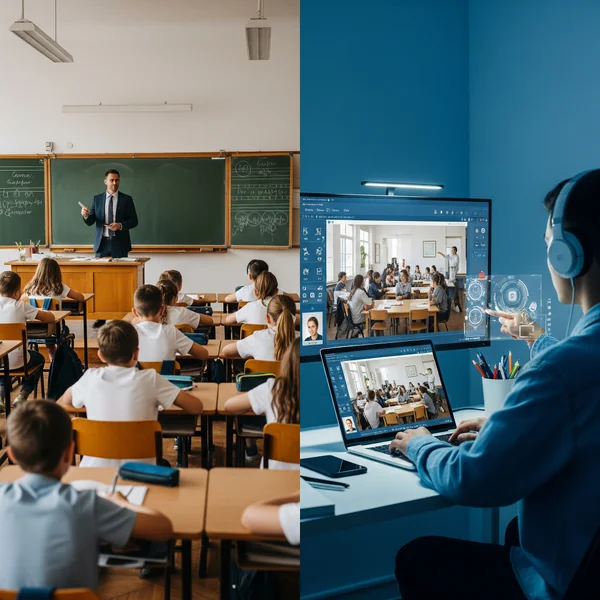
The Current Education Landscape in 2025
Market Reality:
Traditional Education:
- Enrollment decline: Down 8% since 2020 in higher education
- Rising costs: Average tuition increased 25% in past 5 years
- Employer skepticism: 67% of employers now prioritize skills over degrees
- Limited flexibility: Fixed schedules don't match modern work patterns
Online Learning:
- Explosive growth: 300% increase in enrollment since 2020
- Technology advancement: AI tutoring, VR classrooms, adaptive learning
- Global accessibility: Learn from anywhere, any time
- Cost efficiency: 60% lower average costs than traditional education
Driving Forces:
Economic Factors:
- Student debt crisis: $1.7 trillion in outstanding student loans
- Changing job market: Skills-based hiring over credential requirements
- Gig economy growth: Need for flexible, continuous learning
- Geographic constraints: Remote work normalizing location independence
Technological Advancement:
- AI personalization: Adaptive learning that adjusts to individual needs
- Virtual reality: Immersive learning experiences
- Real-time feedback: Instant assessment and progress tracking
- Global connectivity: Access to world-class instructors regardless of location
Learning Effectiveness: The Research
Academic Performance Comparison:
General Findings:
- Online learning outcomes vary significantly based on program quality and student motivation
- Motivated students can achieve comparable results in both online and traditional formats
- Adult learners often adapt well to online learning formats
- Younger students may benefit from more structured traditional environments
Retention and Completion Rates:
Traditional Education:
- College completion: 60% graduate within 6 years
- Course completion: 85-90% complete individual courses
- Engagement levels: High during class, low outside scheduled time
- Peer interaction: Strong social learning components
Online Learning:
- Course completion: 70% for paid courses, 15% for free courses
- Program completion: 55% for degree programs
- Self-motivation required: Success depends heavily on personal discipline
- Flexible pacing: Students can accelerate or slow down as needed
Learning Outcome Quality:
Knowledge Retention:
- Traditional: Better for complex, discussion-based subjects
- Online: Superior for self-paced, skills-based learning
- Hybrid: Best of both worlds with 23% better retention rates
Skill Development:
- Technical skills: Online learning excels (programming, digital marketing)
- Soft skills: Traditional education stronger (leadership, communication)
- Creative skills: Mixed results, depends on implementation quality
Cost Analysis: The Financial Reality
Traditional Education Costs:
Direct Costs (Annual):
- Tuition: $35,000 (private), $10,000 (public in-state)
- Room and board: $12,000-$15,000
- Books and supplies: $1,200-$1,500
- Transportation: $1,000-$3,000
- Personal expenses: $2,000-$3,000
Total annual cost: $50,000-$60,000 (private), $25,000-$35,000 (public)
Hidden Costs:
- Opportunity cost: 4 years of potential earnings ($120,000-$200,000)
- Interest on loans: $20,000-$40,000 over loan lifetime
- Living expenses: Higher costs in college towns
- Technology fees: $500-$1,000 annually
Online Learning Costs:
Direct Costs (Annual):
- Course fees: $5,000-$15,000 for degree programs
- Technology: $1,000-$2,000 (computer, internet, software)
- Proctoring fees: $200-$500 for supervised exams
- Learning materials: $300-$600 (often included)
Total annual cost: $6,000-$18,000
Hidden Savings:
- No room and board: Save $12,000-$15,000 annually
- No commuting: Save $1,000-$3,000 annually
- Continued earning: Can work while studying
- Flexible scheduling: No opportunity cost of full-time study
Return on Investment (ROI):
Traditional Education:
- Average student debt: $37,000 at graduation
- Time to positive ROI: 8-12 years after graduation
- Lifetime earnings boost: $1.2 million for bachelor's degree
- Risk factors: Changing job market may reduce degree value
Online Learning:
- Average student debt: $8,000-$15,000
- Time to positive ROI: 1-3 years
- Skills-based income boost: $10,000-$50,000 annually
- Adaptability: Can update skills continuously as market changes
Flexibility and Accessibility
Schedule Flexibility:
Traditional Education:
- Fixed schedule: Classes at set times, limited options
- Semester system: Rigid start and end dates
- Location bound: Must be physically present
- Life interference: Difficult to balance with work and family
Online Learning:
- Self-paced: Study when convenient for your schedule
- Continuous enrollment: Start anytime, finish at your pace
- Global access: Learn from anywhere with internet
- Life integration: Easy to balance with work and personal commitments
Learning Style Accommodation:
Visual Learners:
- Traditional: Limited to whiteboard and textbooks
- Online: Rich multimedia, interactive diagrams, unlimited replay
Auditory Learners:
- Traditional: Live lectures, discussions
- Online: Recorded lectures, podcasts, audio materials
Kinesthetic Learners:
- Traditional: Labs, hands-on activities
- Online: Simulations, virtual labs, interactive exercises
Accessibility Features:
Geographic Accessibility:
- Traditional: Limited by location and transportation
- Online: Available anywhere with internet connection
Physical Accessibility:
- Traditional: Campus accessibility varies
- Online: Inherently accessible for mobility-impaired students
Economic Accessibility:
- Traditional: High barriers to entry
- Online: Lower costs make education more accessible
Time Accessibility:
- Traditional: Must fit into traditional academic calendar
- Online: Flexible timing accommodates diverse life situations
Quality of Instruction
Instructor Qualifications:
Traditional Education:
- PhD requirements: Most professors have advanced degrees
- Research focus: Many prioritize research over teaching
- Office hours: Limited availability for individual help
- Teaching training: Variable quality of pedagogical preparation
Online Learning:
- Industry experts: Often taught by practitioners with real-world experience
- Teaching specialization: Instructors chosen specifically for teaching ability
- Availability: AI tutoring and support available 24/7
- Global talent pool: Access to best instructors worldwide
Personalization:
Traditional Education:
- One-size-fits-all: Same pace and approach for all students
- Large class sizes: Limited individual attention
- Fixed curriculum: Little customization for individual needs
- Standardized assessment: May not reflect individual learning styles
Online Learning:
- Adaptive learning: AI adjusts difficulty and pace to individual needs
- Personalized pathways: Customized curricula based on goals and interests
- Individual attention: AI tutoring provides unlimited personal support
- Varied assessment: Multiple ways to demonstrate mastery
Try it: Experience personalized tutoring for free on TutLive -- 24/7 availability, no credit card required.
Technology Integration:
Traditional Education:
- Slow adoption: Technology integration often lags behind industry
- Limited resources: Budget constraints limit technology access
- Digital divide: Not all students have equal access to technology
- Outdated methods: Still heavily reliant on lecture-based learning
Online Learning:
- Cutting-edge technology: AI, VR, AR integrated into learning experience
- Continuous updates: Platforms constantly improve and add features
- Interactive elements: Gamification, simulations, virtual labs
- Data-driven insights: Analytics help optimize learning experience
Social and Networking Aspects
Traditional Education Advantages:
Face-to-Face Interaction:
- Rich communication: Non-verbal cues, immediate feedback
- Deep relationships: Stronger bonds formed through physical presence
- Campus culture: Shared experiences, traditions, school spirit
- Extracurricular activities: Sports, clubs, organizations
Professional Networks:
- Alumni networks: Established connections with graduates
- Faculty relationships: Personal mentorship opportunities
- Peer connections: Study groups, friendships, business partnerships
- Industry connections: University-industry partnerships
Online Learning Networking:
Global Connections:
- Worldwide peers: Connect with students from diverse backgrounds
- Industry professionals: Direct access to working practitioners
- Virtual communities: Online study groups, forums, social networks
- Cross-cultural exposure: International perspectives and experiences
Digital Networking Skills:
- Online communication: Essential skills for remote work era
- Digital collaboration: Experience with virtual teamwork
- Platform proficiency: Familiarity with professional networking tools
- Global mindset: Understanding of international business practices
Social Learning Comparison:
Traditional Social Learning:
- Spontaneous interactions: Hallway conversations, study sessions
- Group projects: In-person collaboration and problem-solving
- Peer pressure: Positive accountability from classmates
- Social events: Parties, gatherings, informal networking
Online Social Learning:
- Structured interaction: Planned discussion forums and virtual meetings
- Digital collaboration: Online project management and teamwork
- Self-directed accountability: Must create own motivation systems
- Professional networking: Focus on career-relevant connections
Career Outcomes and Employer Perception
Employment Statistics:
Traditional Education Graduates:
- Employment rate: 85% employed within 6 months
- Average starting salary: $55,000 (bachelor's degree)
- Job satisfaction: 72% satisfied with career trajectory
- Advancement rate: 45% promoted within 3 years
Online Learning Graduates:
- Employment rate: 78% employed within 6 months
- Average starting salary: $52,000 (similar programs)
- Job satisfaction: 78% satisfied with career trajectory
- Advancement rate: 52% promoted within 3 years (skills-focused roles)
Employer Perspectives (2025 Survey):
Factors Employers Value Most:
- Relevant skills and experience (89%)
- Problem-solving ability (82%)
- Adaptability and learning agility (78%)
- Communication skills (75%)
- Formal education credentials (43%)
Employer Attitudes Toward Online Education:
- Fully accept: 67% of employers
- Accept with reservations: 28% of employers
- Prefer traditional: 5% of employers
Industry Variations:
- Technology: 85% accept online education
- Healthcare: 45% prefer traditional credentials
- Finance: 70% accept online education
- Education: 40% prefer traditional degrees
Skill Development Comparison:
Traditional Education Strengths:
- Critical thinking: Strong development through discussion and debate
- Research skills: Extensive library and academic research training
- Writing ability: Multiple papers and assignments
- Presentation skills: Regular in-class presentations
Online Learning Strengths:
- Self-direction: High level of independence and self-motivation
- Digital literacy: Advanced technology skills
- Time management: Excellent organizational and planning abilities
- Adaptability: Comfort with change and new technologies
Learning Styles and Individual Fit
Who Thrives in Traditional Education:
Ideal Candidates:
- Structured learners: Need external deadlines and accountability
- Social learners: Benefit from group discussions and peer interaction
- Young students: 18-22 age group often needs more guidance
- Research-oriented: Planning careers in academia or research
Learning Preferences:
- Kinesthetic learners: Benefit from labs and hands-on activities
- Auditory learners: Thrive in lecture and discussion environments
- Sequential learners: Prefer step-by-step, linear progression
- Collaborative workers: Enjoy group projects and team activities
Who Succeeds in Online Learning:
Ideal Candidates:
- Self-motivated learners: Can create own schedules and stick to them
- Working professionals: Need flexibility to balance career and education
- Adult learners: 25+ with life experience and clear goals
- Technology-comfortable: Comfortable with digital tools and platforms
Learning Preferences:
- Visual learners: Benefit from multimedia and interactive content
- Independent workers: Prefer to work at own pace
- Global thinkers: See big picture and make connections
- Intrinsically motivated: Don't need external pressure to succeed
Assessment: Which Is Right for You?
Choose Traditional Education If:
- You're under 22 and unsure of your career direction
- You need structure and external accountability
- Your field requires hands-on lab work or clinical experience
- You want the full "college experience" with social activities
- You learn best through discussion and debate
- You're planning a career in academia or research
Choose Online Learning If:
- You're working while studying
- You have clear career goals and need specific skills
- You're self-motivated and disciplined
- You need schedule flexibility
- Cost is a major concern
- You're comfortable with technology
- You want to continue earning while learning
The Future: Hybrid and Blended Learning
Emerging Trends:
Hybrid Models:
- Flipped classrooms: Online content delivery, in-person application
- Blended programs: Combination of online and face-to-face instruction
- Competency-based education: Progress based on skill mastery, not time
- Micro-credentials: Stackable certificates and digital badges
Technology Integration:
- AI tutoring: Personalized instruction available 24/7
- Virtual reality: Immersive learning experiences
- Augmented reality: Enhanced real-world learning
- Blockchain credentials: Secure, verifiable digital certificates
Industry Predictions:
By 2030:
- 50% of higher education will be delivered online or hybrid
- Traditional universities will shrink by 25%
- Skills-based hiring will become the norm in 80% of industries
- Continuous learning will replace one-time education
Institutional Changes:
- Universities partnering with online platforms
- Employers creating their own educational programs
- Government supporting alternative credentialing
- AI becoming primary method of instruction
Best of Both Worlds:
Optimal Hybrid Approach:
- Online for content delivery: Lectures, readings, basic concepts
- In-person for application: Labs, discussions, practical work
- AI for personalization: Adaptive learning and individual support
- Community for networking: Social connections and peer learning
Making Your Decision: A Framework
Step 1: Assess Your Situation
Personal Factors:
- Age and life stage: Traditional better for younger students
- Work status: Online better for working professionals
- Family responsibilities: Online offers more flexibility
- Financial situation: Online significantly less expensive
Learning Preferences:
- Self-motivation level: High = online, Low = traditional
- Social learning needs: High = traditional, Low = online
- Technology comfort: High = online, Medium = either
- Structure requirements: High = traditional, Low = online
Step 2: Evaluate Your Goals
Career Objectives:
- Traditional careers: Medicine, law, academia may prefer traditional
- Tech careers: Online often preferred and accepted
- Entrepreneurship: Skills matter more than credentials
- Corporate careers: Mixed, trending toward skills-based
Learning Outcomes:
- Broad education: Traditional offers comprehensive liberal arts
- Specific skills: Online provides targeted, practical training
- Research abilities: Traditional stronger for academic research
- Practical application: Online often more job-relevant
Step 3: Consider Resources
Financial Resources:
- Limited budget: Online is clear winner
- Ample funding: Traditional offers "full experience"
- Existing debt: Online minimizes additional borrowing
- Family support: May influence choice and budget
Time Resources:
- Full-time availability: Traditional possible
- Limited time: Online offers flexibility
- Competing priorities: Online allows better balance
- Urgent skill needs: Online provides faster results
Step 4: Plan Your Path
Traditional Education Path:
- Research institutions with strong programs in your field
- Apply for financial aid and scholarships
- Plan for 4+ year commitment
- Prepare for full-time study
- Budget for total costs including opportunity cost
Online Learning Path:
- Identify specific skills needed for your goals
- Research reputable platforms and programs
- Create self-study schedule and accountability systems
- Plan for continuous learning and skill updates
- Build portfolio to demonstrate capabilities
Recommendations by Field
STEM Fields:
Computer Science:
- Recommendation: Online learning preferred
- Rationale: Industry values skills over degrees, rapid technology changes
- Platforms: Coding bootcamps, online certifications often sufficient
Engineering:
- Recommendation: Hybrid approach
- Rationale: Need theoretical foundation and hands-on lab experience
- Strategy: Online for theory, traditional for labs and projects
Medicine/Healthcare:
- Recommendation: Traditional education required
- Rationale: Clinical experience and hands-on training essential
- Note: Some specializations may supplement with online continuing education
Business and Finance:
Business Administration:
- Recommendation: Either approach viable
- Rationale: Skills and networking matter most
- Strategy: Choose based on personal circumstances and career goals
Entrepreneurship:
- Recommendation: Online learning preferred
- Rationale: Practical skills and speed to market crucial
- Focus: Business skills, marketing, technology proficiency
Liberal Arts and Humanities:
English/Literature:
- Recommendation: Traditional preferred
- Rationale: Discussion, debate, and diverse perspectives essential
- Alternative: High-quality online programs with strong discussion components
History/Philosophy:
- Recommendation: Either approach viable
- Rationale: Depends on career goals (academia vs. practical application)
Creative Fields:
Graphic Design:
- Recommendation: Online learning often sufficient
- Rationale: Portfolio and skills matter more than credentials
- Advantage: Access to current industry tools and trends
Fine Arts:
- Recommendation: Traditional preferred
- Rationale: Hands-on instruction and peer critique valuable
- Supplement: Online learning for business and marketing skills
Tools and Platforms for Online Learning
Making the Most of Online Education:
Online learning platforms range from fully accredited degree programs at traditional universities to skills-based courses and personalized tutoring services. The key is finding the right fit for your goals.
For personalized, on-demand learning support, TutLive stands out:
TutLive Advantages:
- Personalized curriculum: Adapts to your learning style and pace automatically
- 24/7 personal tutor: Instant help whenever you need it, in your own language
- Skills assessment: Identifies strengths and gaps so you focus where it matters
- Industry relevance: Content updated based on job market demands
- Affordable access: Quality education at a fraction of traditional cost -- with a free plan to get started
Integration Benefits:
- Seamless experience: All learning tools in one platform
- Progress tracking: Detailed analytics on your development
- Goal alignment: Education tailored to your career objectives
- Multi-subject support: From STEM to languages, one tutor covers it all
Conclusion: The Choice Is Yours
Key Takeaways:
Online Learning Wins For:
- Cost effectiveness: 60-80% lower total costs
- Flexibility: Study anytime, anywhere
- Skills focus: Practical, job-relevant training
- Technology integration: Cutting-edge learning tools
- Working professionals: Career advancement while employed
Traditional Education Wins For:
- Comprehensive experience: Full college experience with social aspects
- Structured environment: External accountability and guidance
- Research opportunities: Access to labs and academic research
- Networking: Strong alumni and peer connections
- Certain professions: Fields requiring hands-on training
The Future Is Hybrid:
- Best of both worlds: Combine online efficiency with in-person experience
- Continuous learning: Education as ongoing process, not one-time event
- Skills-based economy: Employers prioritizing capabilities over credentials
- Technology enhancement: AI and VR transforming all education
Your Next Steps:
- Honest self-assessment: Evaluate your learning style, goals, and situation
- Research specific programs: Look at outcomes and employer acceptance in your field
- Consider hybrid options: Many universities now offer blended programs
- Start with experimentation: Try online courses to test your learning preferences
- Plan for continuous learning: Education doesn't end with one degree or program
The Bottom Line:
There's no universally "better" choice. The best educational path depends on your individual circumstances, learning style, career goals, and life situation.
What matters most:
- Clear goals: Know what you want to achieve
- Honest assessment: Understand your strengths and limitations
- Quality programs: Choose reputable institutions and platforms
- Continuous adaptation: Be ready to learn and grow throughout your career
The education landscape will continue evolving. The most successful students will be those who remain flexible, embrace new technologies, and focus on developing skills that matter in the modern economy.
Start Learning Smarter Today
Whether you choose online, traditional, or hybrid education, having the right support makes all the difference. TutLive gives you a personal tutor available 24/7 that adapts to your learning style and pace -- with a free plan that includes 5 minutes of audio tutoring and 20 messages per month.
Start learning for free on TutLive -- no credit card required.
Important Note: Educational choices should be based on individual circumstances, career goals, and learning preferences. This comparison provides general guidance but cannot replace personalized advice considering your specific situation. Research specific programs and institutions thoroughly before making decisions that will impact your future.
Related Articles

A-Level History, Psychology & Further Maths 2026: Humanities & Beyond
From dissecting historical sources to evaluating psychological studies to navigating complex numbers — A-Level Humanities and Further Maths demand very different skills. Here's how to master all three, with an emphasis on the verbal thinking that separates good answers from outstanding ones.
A-Level Biology, Chemistry & Physics 2026: Complete Science Exam Guide
A-Level Sciences in 2026 are the gateway to medicine, engineering, and research. Here's everything you need to know about Biology, Chemistry, and Physics — plus an 8-week revision plan and why voice-based practice beats silent reading.
AP Computer Science 2026: CS A & CS Principles Complete Guide
AP CS A and AP CS Principles test very different skills. This guide covers both exams in depth — Java concepts, FRQ strategies, the Create Performance Task, and how to practice coding logic without a compiler on exam day.